From in-silico chemists and closed-loop labs to failures at counting carbons.
Agentic large language model systems are moving from conversational and coding assistants to co-scientists in the molecular sciences, such as planning syntheses, calling domain tools, and closing experimental loops with laboratory automation. Recent demonstrations span autonomous drug repurposing, retrosynthesis, and genome-wide virtual screening, all built on stacks of learned representations, predictors, and simulators. Yet careful benchmarking has exposed striking failures at seemingly simple tasks: tool-augmented agents reach only around 50% accuracy on chemical cost estimation, chemistry language models fail systematic symbolic reasoning on molecular graphs, and single-cell foundation models for perturbation prediction do not outperform linear baselines. This workshop takes the contrast between agentic ambition and methodological fragility as its starting point with explicit space for negative results, rigorous baselines, and benchmark contributions alongside methodological advances.
We invite submissions to Agentic Systems for Molecular Sciences, a NeurIPS 2026 workshop taking place in Paris on 12 or 13 December.
Agentic systems are only as good as the representations, predictors, generative models, and simulators they orchestrate. Progress on the agentic frontier depends on progress in the underlying machine learning methods, and on honest evaluation of both. We invite submissions across the full stack, from foundational methods to end-to-end agents, including negative results, careful baselines, and benchmark contributions alongside methodological advances. We welcome participation from machine learning researchers, chemists, biologists, materials scientists, and interdisciplinary practitioners, and encourage submissions from early-career and underrepresented authors.
Topics include, but are not limited to:
Contributions that clarify what current methods can and cannot do, including negative results, careful ablations, and rigorous baselines, are especially welcome.
Format. Submissions must use the NeurIPS 2026 workshop LaTeX template. The main text is limited to 5 content pages, including all figures and tables. References and appendices do not count toward the page limit, but reviewers are not obliged to read supplementary material — the main text must be self-contained. Maximum file size: 50 MB.
Anonymity. Reviewing is double-blind. Submissions must be anonymized, with author names, affiliations, and acknowledgments removed, and prior work cited in the third person.
Submission site. Submissions are managed via OpenReview. Papers remain private during review. All authors should maintain up-to-date OpenReview profiles for conflict-of-interest management and paper matching. Submission site: OpenReview
Non-archival policy. The workshop is non-archival. Papers under review elsewhere are welcome, and accepted papers may be published at other venues afterward. Work already published at NeurIPS or other archival ML venues should not be submitted; substantial extensions of prior non-ML-venue work are eligible.
Presentation. Accepted contributions are presented as posters, with a subset selected for contributed talks. Contributed-talk slots are reserved for early-career first authors. A Best Paper Award will be given for the strongest overall contribution.
Submissions are reviewed on OpenReview. The workshop is non-archival.
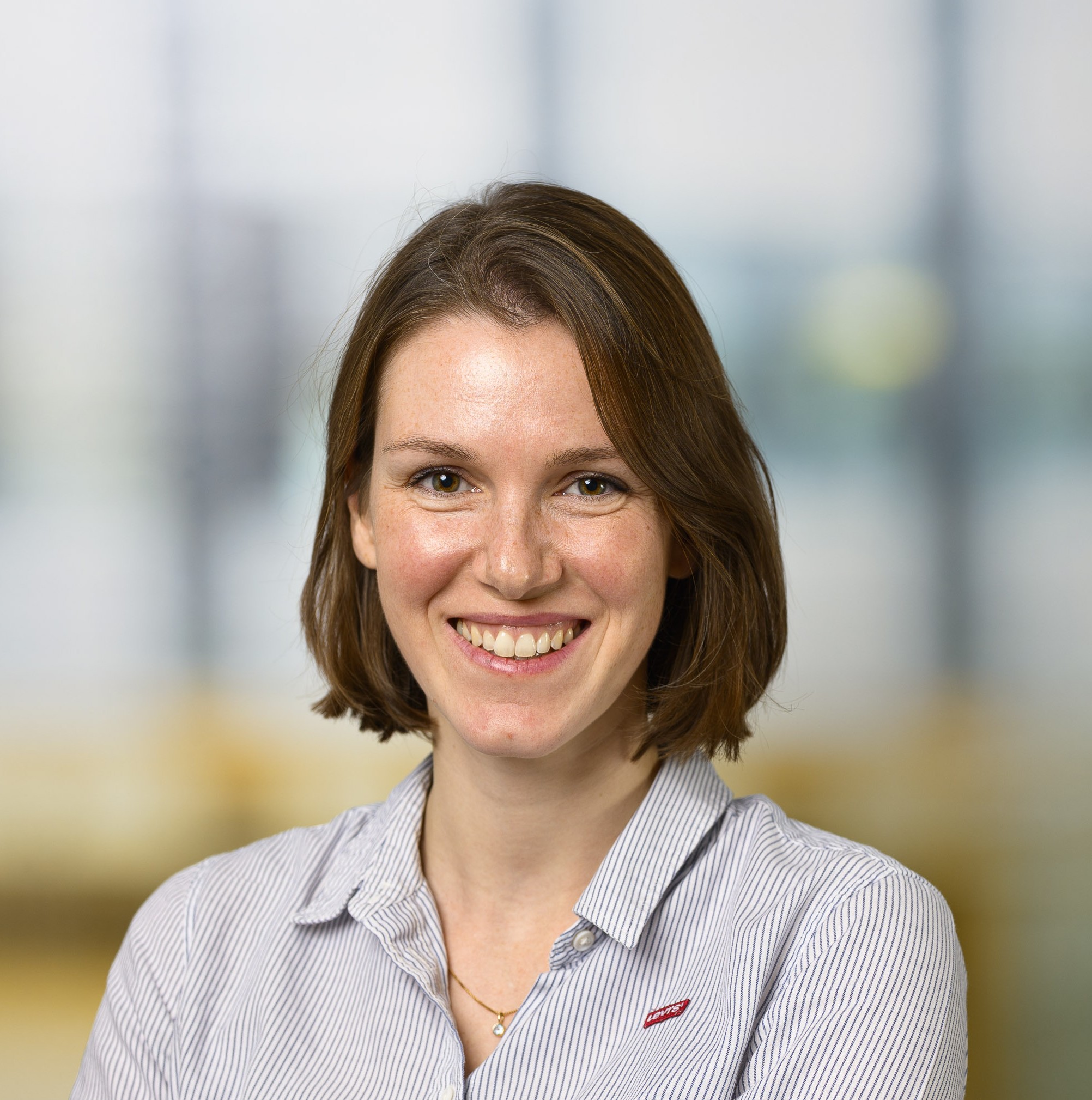
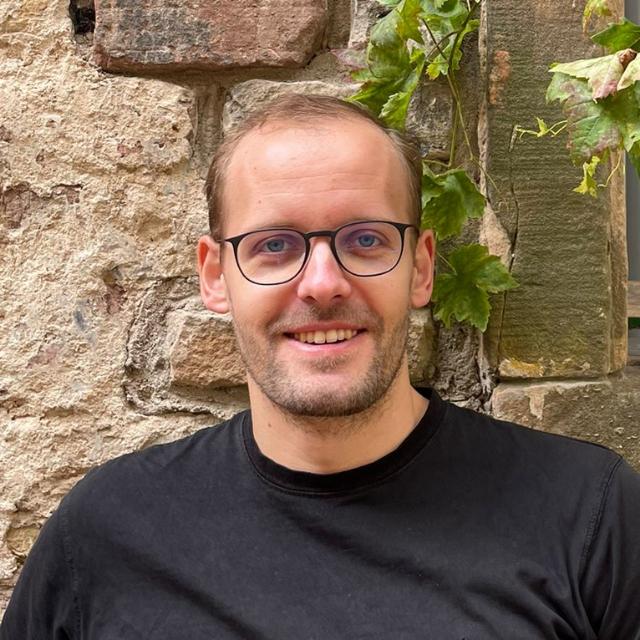
Co-founder and head of science at FutureHouse; pioneer of agentic AI systems for science (ChemCrow, ether0, PaperQA).
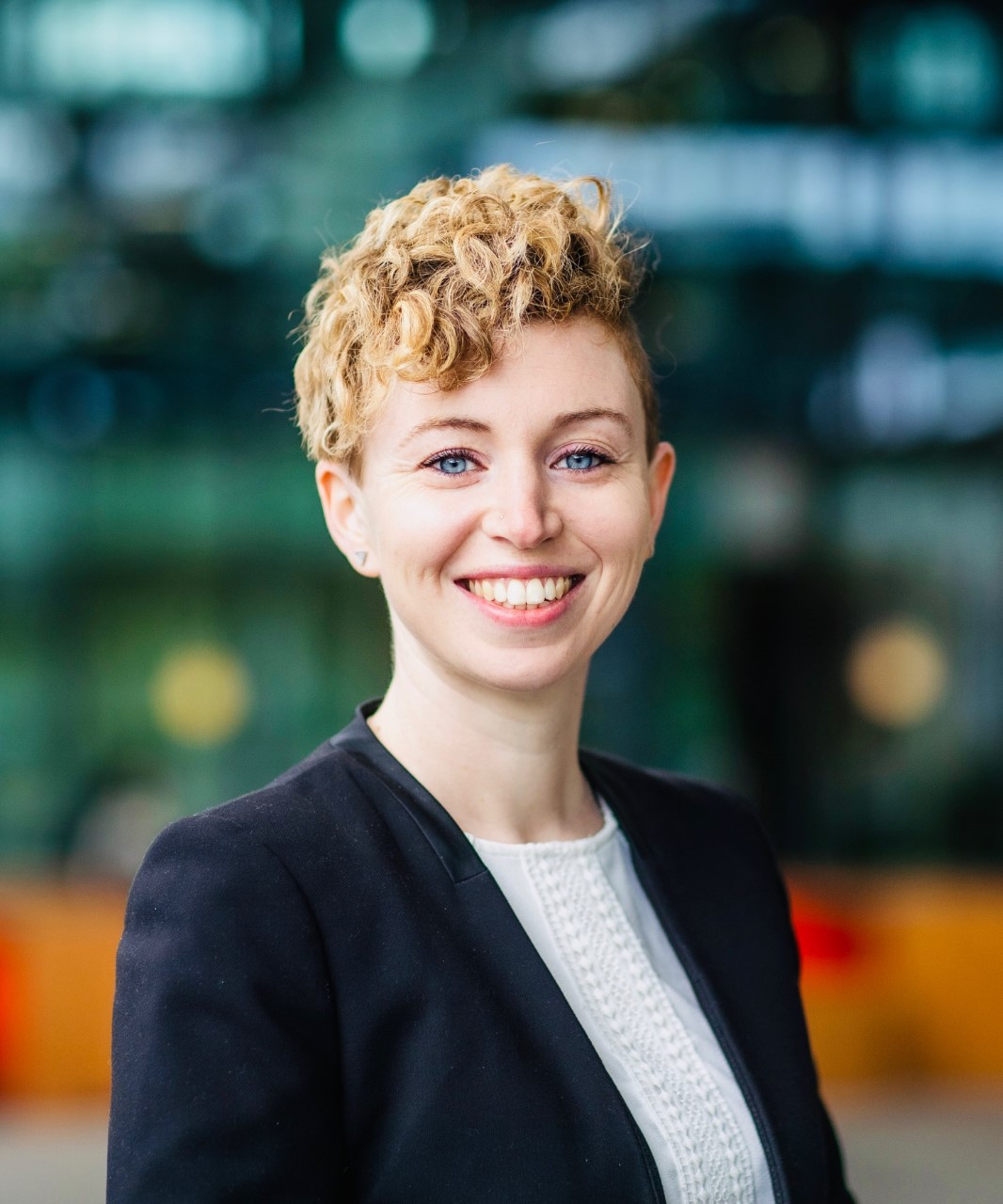
Associate Professor leading the Molecular Machine Learning team, bridging AI and the wet-lab for drug discovery.

Deputy Dean and professor at the Institute for AI Industry Research (AIR); machine learning, information retrieval, and AI for Science.
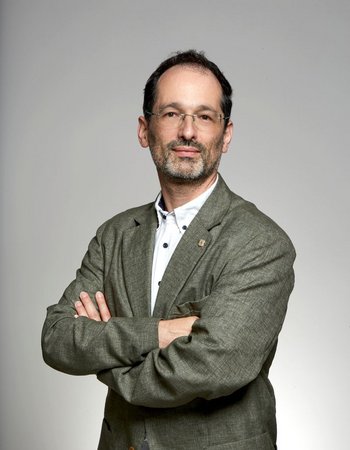
Pioneer of machine-learning interatomic potentials and first-principles property prediction.

Co-founder and CEO of Bioptimus, building foundation models for biology and medicine; member of the French National Academy of Technologies.

Assistant Professor leading the Laboratory of Artificial Chemical Intelligence; AI-accelerated synthesis and chemical reasoning.
Professor of Materials Informatics; data-driven materials discovery combining high-throughput DFT and machine learning.
Nadine Schneider, Novartis
Günter Klambauer, ELLIS Unit Linz & Johannes Kepler University Linz
Ola Engkvist, AstraZeneca & Chalmers University of Technology
Marwin Segler, Microsoft Research
Sohvi Luukkonen, ELLIS Unit Linz & Johannes Kepler University Linz
| Time | Duration | Session |
|---|---|---|
| 9:00 – 9:10 | 10 min | Opening remarks |
| 9:10 – 10:20 | 70 min | Block 1: 2 invited talks (20 min each) + 1 contributed talk (10 min) + 20 min discussion |
| 10:20 – 10:50 | 30 min | ☕ Morning coffee break & posters on display |
| 10:50 – 12:00 | 70 min | Block 2: 2 invited (20 min) + 1 contributed (10 min) + 20 min discussion |
| 12:00 – 13:00 | 60 min | 🍽️ Lunch break & posters on display |
| 13:00 – 14:10 | 70 min | Block 3: 2 invited (20 min) + 1 contributed (10 min) + 20 min discussion |
| 14:10 – 15:10 | 60 min | Block 4: 1 invited (20 min) + 1 best-paper talk (10 min) + 1 contributed (10 min) + 20 min discussion |
| 15:10 – 15:40 | 30 min | ☕ Afternoon coffee break & posters on display |
| 15:40 – 16:40 | 60 min | 🎙️ Panel discussion |
| 16:40 – 17:50 | 70 min | 🖼️ Dedicated poster session |
| 17:50 – 18:00 | 10 min | Closing remarks |
The workshop proposal is supported by the ELLIS unit Linz and the ELLIS unit Cambridge.
For questions about the workshop, contact us at ml4molecules@ml.jku.at.